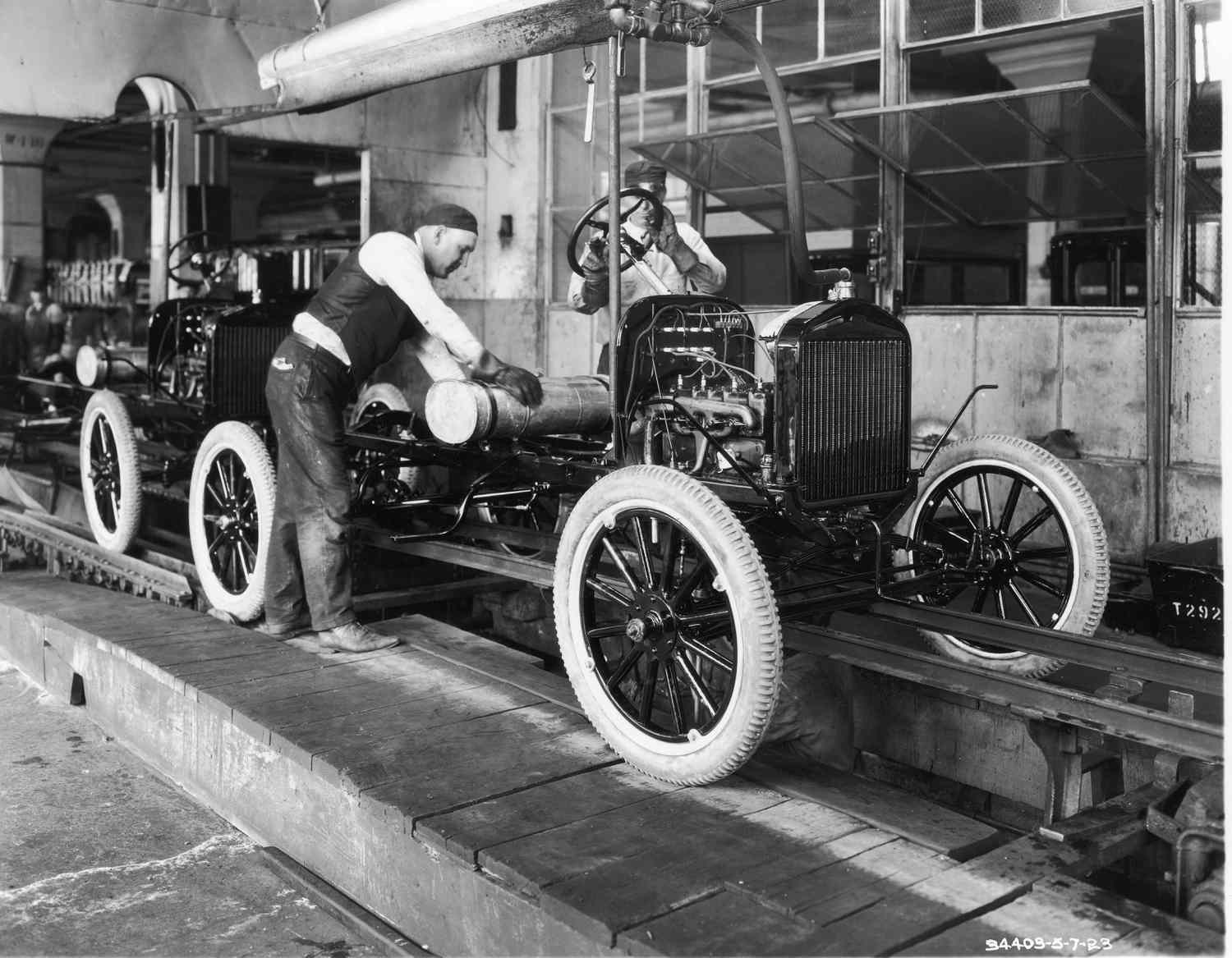
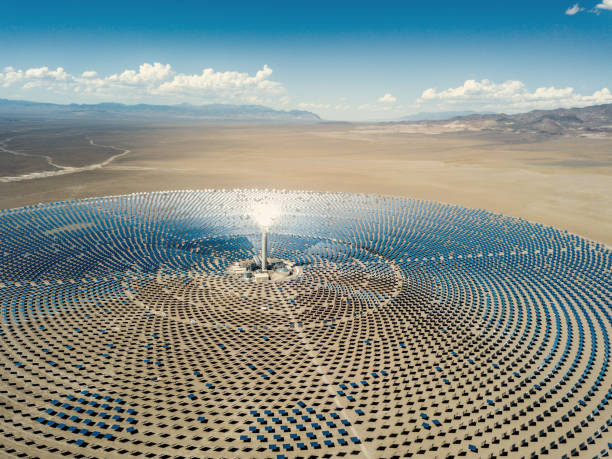
The jobs nobody has heard of yet.
Part 2/3
By Stephen Messer
•

Stephen Messer Co-founder of Collective[i] and LinkShare (sold to Rakuten for $425M, 1996–2005). E&Y
Entrepreneur of the Year. Board member, Spire Global (NYSE: SPIR). Building intelligence.com
In the summer of 1996, we launched LinkShare. Affiliate marketing didn't exist as a business category. There was no job title for it, no industry conference, no trade association. When I told people what we were building, the most common response was a polite nod that meant: I have no idea what you're talking about.
Within a few years, millions of people were earning real income from it. Influencers, as we'd later call them — though that word didn't exist either — were a direct descendant of what we built. An entire economic layer appeared that nobody had predicted, nobody had trained for, and nobody had a five-year plan to enter.
That's how it always works. The jobs that define the next era don't show up in any forecast. They emerge from the infrastructure of the new thing, and then suddenly they're everywhere, and nobody can imagine the world without them.
I've been thinking about this constantly as I watch the conversation about AI and jobs play out. Because what I keep seeing isn't an honest reckoning with the future. It's a very old fear wearing a new mask.
A note on where I'm sitting: I co-founded LinkShare in 1996 and built it into the affiliate marketing infrastructure that underpins much of e-commerce today. I co-founded Collective[i] and intelligence.com. I sit on the board of Spire Global. I've spent 30 years watching new technology categories emerge and create industries that weren't in anyone's model. This isn't commentary from the sidelines.
The Graduate Moment
There's a scene in The Graduate where a family friend corners Dustin Hoffman at a party and leans in conspiratorially: "I just want to say one word to you. Just one word. Plastics."
It's played as comedy — the banality of it, the misplaced confidence, the collision between that generation's certainty and the protagonist's existential drift. But here's the thing: he wasn't wrong. Plastics was the future. The person who said it just couldn't explain why in a way that meant anything to someone who hadn't seen it yet.
I keep thinking about all the jobs being created right now that feel like that. The people building out AI infrastructure, new energy systems, autonomous aircraft, satellite intelligence networks, robotics platforms — they're the ones leaning in at the party. The rest of the room is doing the polite nod.
The jobs people are afraid of losing mostly pay less, demand more, and offer fewer possibilities than the jobs coming to replace them. We've never once looked back and wished we could return. Why would this time be different?
The jobs that didn't exist
Let me make this concrete, because it's easy to say "new jobs will emerge" as an abstract comfort and easy to dismiss it as the same thing optimists always say. So let's actually look at the record.

Notice the pattern. Not just that new jobs appeared, but that each wave paid better than what it replaced, required more interesting skills, and opened to people who had no obvious path into the previous category. The commercial internet alone now supports 28.4 million American jobs and drives 18% of US GDP. None of that was in any forecast from 1994.
The question isn't whether new jobs will come. They always have. The question is whether we're looking for them or looking backwards.
The UBI conversation bothers me
I want to be honest about something, even though it cuts against the grain of a lot of serious people I respect.
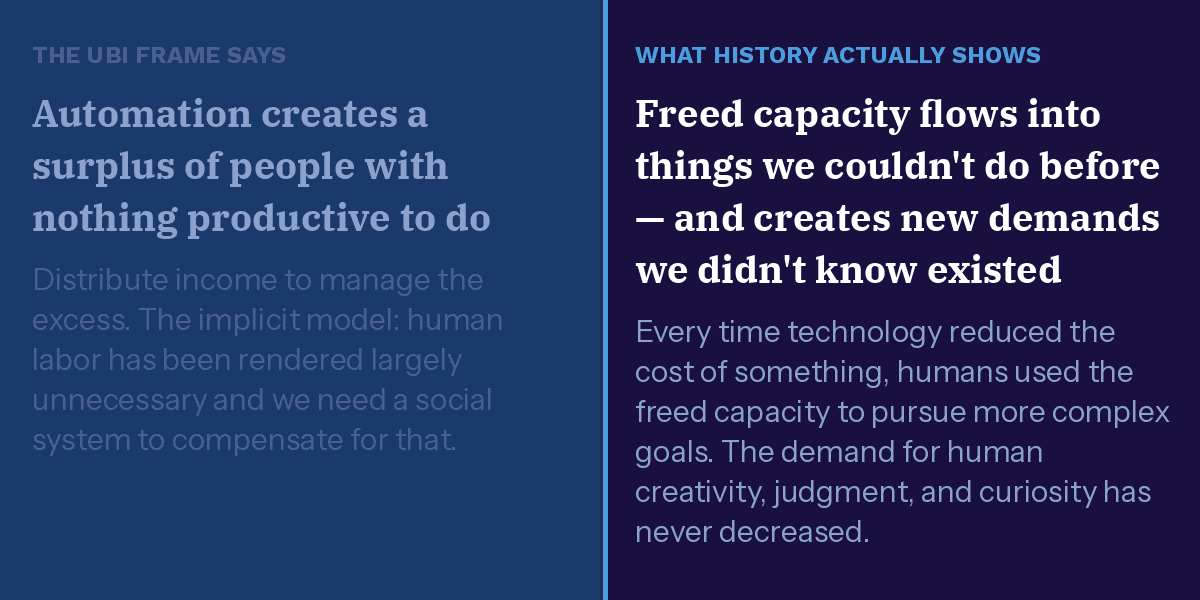
Universal basic income has become the implicit frame for a lot of the conversation about AI and work. The argument is essentially: automation will eliminate so many jobs that we'll need to pay people just to exist. It comes up at presidential debates. It comes up at Davos. Serious economists defend it with serious models.
And I find it, at some level, insulting to humanity.
Not because the concern isn't real — the disruption is real, and the transition will genuinely hurt people who are mid-career in fields that are about to change fast. That's not nothing. But the UBI frame assumes the endpoint is a world where human beings don't have enough useful things to do. That people, given time and resources and tools of extraordinary power, will... what, exactly? Run out of problems to solve? Run out of things to build? Run out of curiosity?
The thought experiment worth running
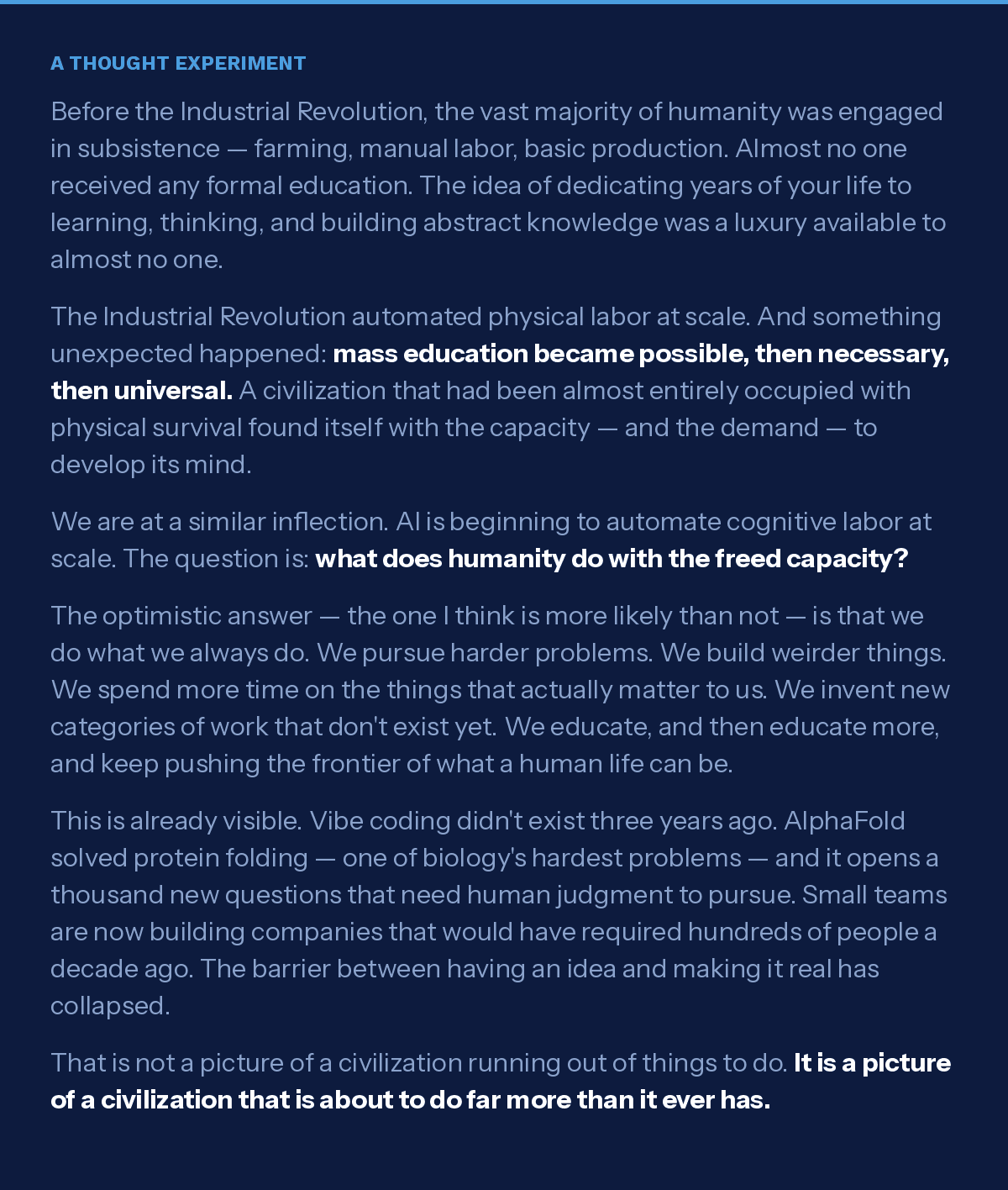
Here's the exercise I actually want to do. Not "what jobs will AI eliminate?" — that's the question everyone is already running, and it produces nothing but anxiety. The more interesting question is:
What happens to a civilization when the cost of executing ideas approaches zero?
What deflation actually means for regular people
There's one more piece of this that almost nobody is talking about, and it might be the most practically important.
AI, robotics, new energy sources, and advanced manufacturing don't just change what jobs exist. They change the price of everything. And not in a small way.
Think about what happens when energy gets dramatically cheaper — which is what building out nuclear and renewable infrastructure at scale actually does. Cheaper energy means cheaper manufacturing, cheaper food production, cheaper transportation, cheaper heating and cooling. Think about what happens when robotics lowers the cost of construction — housing, the biggest financial burden most families carry, becomes less expensive to build. Think about what happens when AI dramatically lowers the cost of legal advice, medical diagnosis, financial planning — services that have historically been available only to people who could afford them.
The people who lose the most from this transition are the incumbents in expensive, protected, inefficient industries. The people who gain are everyone else — especially people in the middle and at the bottom, for whom the high cost of those services has always been the biggest barrier to a better life.
The real story of AI economics isn't unemployment. It's massive, broad-based deflation — a decline in the cost of things that have been artificially expensive for decades. That's not a threat to living standards. It's the biggest expansion of purchasing power since the Industrial Revolution.
So what do we actually do
I'm not arguing that the transition is painless. It isn't. People mid-career in fields that are about to change fast are going to face real disruption, and pretending otherwise is its own kind of dishonesty.
But the response to that disruption can't be to slow down the technology or to assume the endpoint is people sitting home collecting checks. The response has to be to move toward the new thing, not away from it.
From where I sit — having watched the affiliate marketing economy emerge from nothing, having helped build the intelligence infrastructure at Collective[i], having seen from my work with Spire what satellite data is doing to industries that didn't know they needed it — the pattern is always the same. The people who win are the ones who get curious about the new thing before everyone else does. The people who lose are the ones who spend their energy protecting the old thing.
The jobs coming out of AI, new energy, robotics, space, and autonomous systems are going to be better than the jobs they replace. Better paid, more interesting, more connected to things that actually matter. They're going to be distributed across geographies and backgrounds in ways the old economy wasn't. And they're going to include entire categories that don't exist yet, that we'll look back on in twenty years the way we look back on "social media influencer" — as something that was obviously going to be enormous and that almost nobody saw coming.
The question isn't whether those jobs will exist. They will.
The question is whether you're going to be looking for them.
Read part 3/3