The $3 trillion AI bet: boom, bubble, or something entirely new?
•

Every technological boom begins with conviction.
Every crash begins with doubt.
Wall Street is pouring trillions into AI infrastructure, with Morgan Stanley projecting nearly $3 trillion in spending by 2029. Few technologies in modern history have reached this level of capital intensity so quickly.
The question is no longer whether AI is transformative.
It is whether the systems being built around it can sustain the pace of change.
That question was at the center of a recent C[i] Forecast conversation with Azeem Azhar, founder of Exponential View, author of Exponential: Order and Chaos in an Age of Accelerating Technology, and one of the world’s leading analysts of exponential technologies.
A preview segment from the conversation, titled The Architecture of Change: How Technological Revolutions Reshape Systems, explores how major technological shifts do more than introduce new tools. They reshape entire economic, industrial, and institutional systems.
When technology reshapes systems, not just products
One of Azhar’s central arguments is that technological revolutions should not be understood through individual products or companies alone.
They operate at the level of systems.
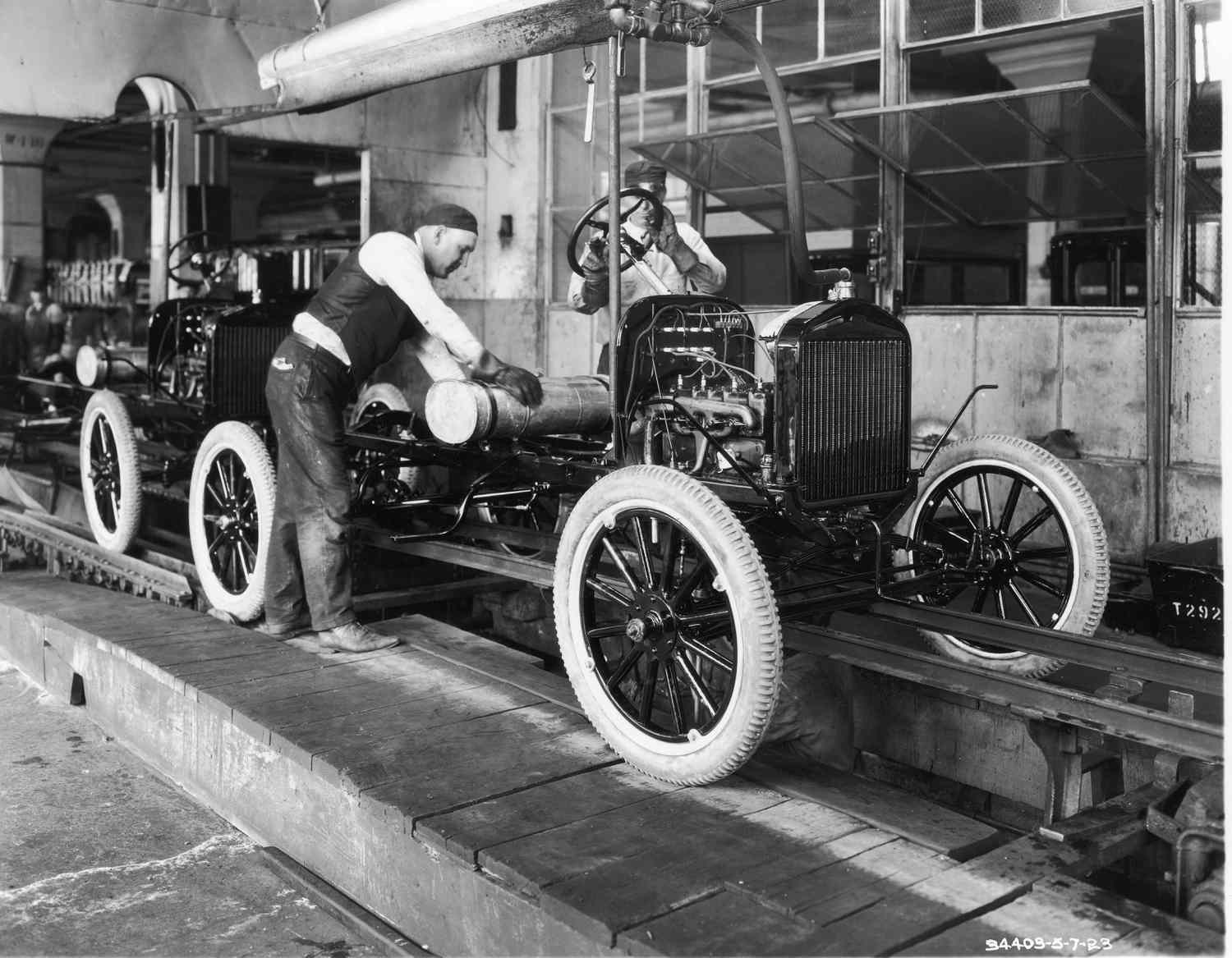
Railways reorganized trade and time.
Electricity restructured factories and cities.
The internet rewired information and coordination.
AI, Azhar argues, belongs in this category of general-purpose technologies that reshape economic structures, labor markets, capital flows, and institutional behavior.
Understanding AI therefore requires looking beyond model performance and into how incentives, infrastructure, and power are being reorganized.
Is this 1999 all over again?
Comparisons to the dot-com bubble are common, but often misleading.
Rather than relying on narrative shortcuts, Azhar has developed a structured framework to compare the current AI buildout with past infrastructure booms, including the railway expansions of the 1870s, the telecom frenzy of the 1990s, and the dot-com crash of 2000.
This framework is designed to answer a more precise question:
When does rapid expansion cross the line from durable growth into structural fragility?
A framework for reading the AI boom
Economic strain
AI infrastructure spending is approaching 0.9 percent of US GDP, with projections reaching 1.6 percent by 2030. More than a third of current US GDP growth is now tied to data center construction. When railway investment reached similar levels in the 1870s, it preceded the Panic of 1873.
This gauge highlights the macroeconomic pressure created by concentrated capital deployment.
Industry strain
GenAI currently generates roughly $60 billion in revenue against $370 billion in capital expenditure, a ratio worse than historical peaks in railways or telecoms. Hyperscalers are now investing nearly 70 percent of operating cash flow into capex, up sharply from pre-ChatGPT levels.
This imbalance raises questions about how long capital markets will tolerate delayed returns.
Revenue growth
GenAI revenues are doubling annually, with projections exceeding 120 percent compound growth through 2028. No prior infrastructure boom exhibited revenue acceleration at this pace.
However, GPUs depreciate in three years, not decades. This fundamentally alters the risk calculus compared to railways or fiber networks.
Valuation heat
The Nasdaq currently trades at a price-to-earnings ratio of roughly 32, far below the dot-com peak. On the surface, valuations appear restrained, but equity pricing alone does not capture infrastructure risk.
Funding quality
Roughly half of projected AI infrastructure spend can be self-funded by large technology firms. The remainder depends on private credit, securitized finance, and government commitments. The resilience of these funding channels will matter if growth slows or macro conditions tighten.
What makes AI different and what does not
A key insight from The Architecture of Change is that AI compresses timelines.
Household adoption of generative AI has outpaced both the internet and personal computers, collapsing decades of diffusion into just a few years. This acceleration amplifies both opportunity and fragility.
At the same time, AI infrastructure depreciates rapidly, meaning mistakes are punished faster than in past technological revolutions. The system moves quickly in both directions.
Decisions under structural uncertainty
The conversation moved beyond diagnosis into decision-making.
Participants explored where risk is most concentrated, which actors are most exposed if momentum falters, and how leaders should position themselves if they believe in AI’s long-term potential while recognizing short-term instability.
Azhar emphasized that history does not punish optimism.
It punishes unexamined optimism.
Technological revolutions reshape systems regardless. The question is whether institutions adapt with discipline or chase momentum blindly.
Watch the conversation on Intelligence.com
The full C[i] Forecast conversation with Azeem Azhar is available on Intelligence.com, including the preview segment The Architecture of Change: how technological revolutions reshape systems.
You can also explore Azhar’s ongoing analysis through Exponential View.
As AI continues to reshape economic and institutional systems at historic speed, understanding its architecture may matter as much as believing in its promise.